

Not that basic fuschin!
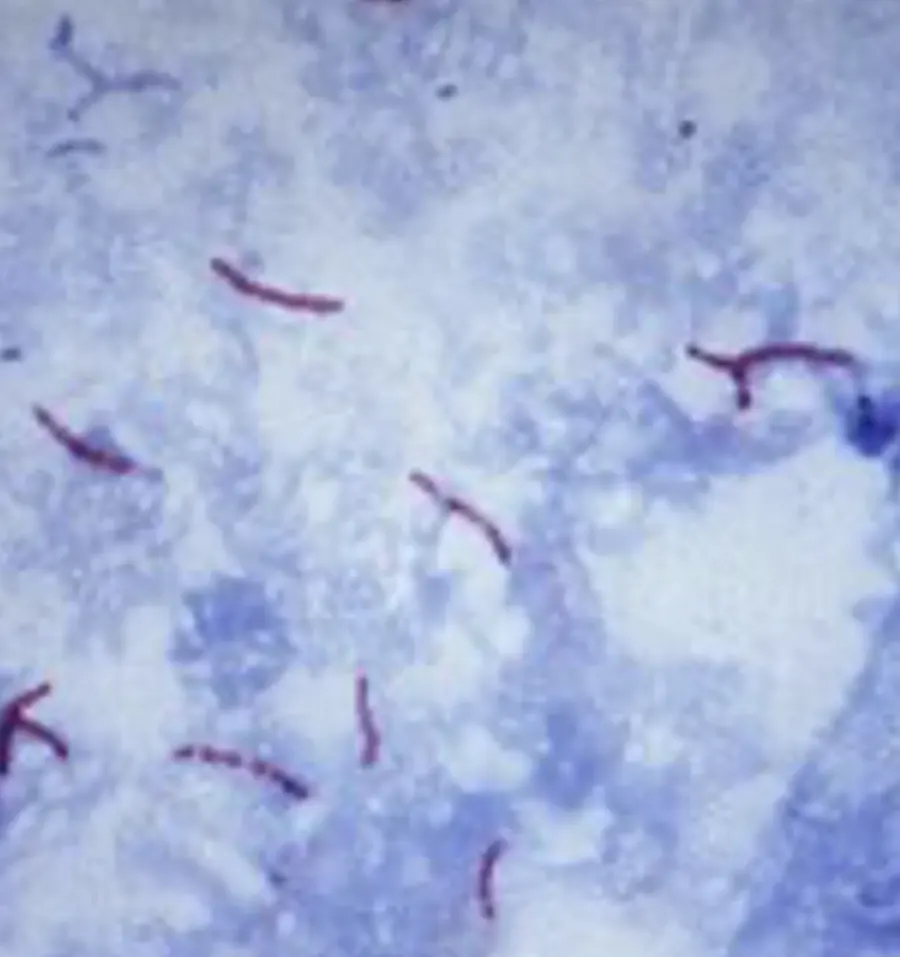
Paul Erlich was the first to develop a technique for staining Koch's bacilli, which had just been discovered at the end of the 19th century. Acid-fast bacteria, mycobacteria have a high concentration of lipids in their cell walls that prevent the penetration of dyes. Heating the slide allowed the dye to be introduced, which was the beginning of the solution.
Zhiel then modified the technique by introducing phenol as a mordant ("a substance that allows two chemical compounds to be combined or married, as the dye and its target originally have no affinity for each other"*). Neelsen was the one who changed the initial dye to basic fuchsin. Finally, Kinyoun replaced heating with a higher concentration of carbolic fuchsin.
The basic principle remains the same: adding hydrochloric acid to the differentiator will not affect the staining of the bacilli.
Fuchsin, one of many aniline-based dyes, is also used as a counterstain in Gram staining because it provides excellent contrast with crystal violet. It is also used to stain spirochetes (Treponema vincentii) and is a component of Schiff's reagent. Its name comes from the similarity of its color to fuchsia flowers.
Who was the first to develop a staining technique for Koch’s bacilli?
Paul Ehrlich was the first to develop a staining technique for Koch’s bacilli at the end of the 19th century.
Why are mycobacteria difficult to stain?
Mycobacteria are acid-fast bacilli because their cell walls contain a high concentration of lipids, which prevents the penetration of dyes.
What initial solution allowed the dye to penetrate mycobacteria?
Heating the slide allowed the dye to penetrate, marking the beginning of an effective solution.
What modification did Ziehl introduce to the staining technique?
Ziehl introduced phenol as a mordant to promote binding between the dye and its target.
What contribution did Neelsen make to the technique?
Neelsen replaced the original dye with basic fuchsin.
What improvement was proposed by Kinyoun?
Kinyoun replaced heating with a higher concentration of carbol fuchsin.
What is the basic principle shared by these staining techniques?
The basic principle remains the same: adding hydrochloric acid to the decolorizer does not affect the staining of the bacilli.
What is fuchsin used for in microbiology?
Fuchsin is used as a counterstain in Gram staining, to stain spirochetes, and as a component of Schiff’s reagent.
Why is fuchsin useful in Gram staining?
It provides excellent contrast with crystal violet.
What is the origin of the name “fuchsin”?
The name comes from the similarity of its color to that of fuchsia flowers.


| 470, avenue Laurendeau, Montréal-Est (Quebec) H1B 5M2 | |||
| Phone: | 514 498-3620 | Toll free: | 833 498-3620 |
| Email: | chaptec@chaptec.com | ||

