

The question that shocks!
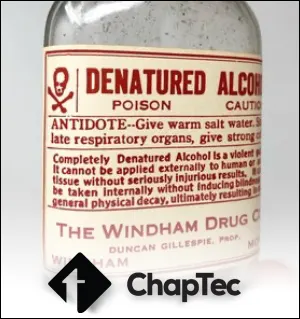
In my sales job, the moment I get the most reactions is when I dare to suggest to one of the few labs still using absolute ethanol, that they should switch to denatured ethanol. Immediately, they throw it back in my face:
- It won't work
- It won't give the same result
- My tissues will be overdried
- I'll have to revalidate everything
- Etc.
Yet the issue has already been studied! G. Silvestrini and associates published a study in Rome in 2002, in which they dared to try switching from absolute to denatured ethanol, Here's an extract from their publication:
“The pilot study was concluded with excellent results, all biopsy samples for a period of 6 months were treated with denatured ethyl alcohol. In all, some 20,000 histological preparations were treated with denatured ethyl alcohol, for a total of 8,000 cases with over 400 immunohistochemical tests. This study showed that the quality of the histological preparations was superimposable; moreover, the use of denatured ethyl alcohol in no way altered the quality of the histochemical and immunohistochemical reactions.”
You know, denatured alcohol is ethanol to which one or more products have been added to alter its taste and smell. You can't even distill it to recover just the ethanol, as the boiling points of the additives are too similar.
Absolute alcohol is taxed, and labs, that are exempt, must jump through so many hoops (ordering through the pharmacy, keeping a record of use, keeping the product safe to avoid theft etc.) that one can really wonder whether it's worth the effort. What's more, in a world where labs are striving to standardize procedures, it's astonishing that we're still clinging to this reagent from another age.
So if you're fed up with all this, ask us for a sample of denatured ethanol. You'll see that the results are identical, but without the headaches!
L'alcol etilico denaturato in istopatologia
G. SilvestriniG. De MuroB. PiniR. CurtoF. LenciD. Di GianvitoG. AnzoniA.M. Di GiacintoR. PompeiL. VeneziaS. BerniF. FanellaP. MocettiS. Uccini
Q: Why do some laboratories hesitate to switch from absolute ethanol to denatured ethanol?
A: They often believe it will not work the same, that it may overdry tissue, or that it will require complete revalidation of procedures.
Q: What did the study by G. Silvestrini et al. show?
A: That after processing about 20,000 samples using denatured ethanol, histological quality and immunohistochemistry results were equivalent to those obtained using absolute ethanol.
Q: What is denatured ethanol?
A: It is ethanol with additives that make it unsuitable for consumption but still chemically effective as a dehydrating agent.
Q: Why consider switching?
A: Denatured ethanol avoids regulatory restrictions and handling burdens associated with absolute ethanol, while providing the same histological performance.


| 470, avenue Laurendeau, Montréal-Est (Quebec) H1B 5M2 | |||
| Phone: | 514 498-3620 | Toll free: | 833 498-3620 |
| Email: | chaptec@chaptec.com | ||

