

Plastic or cardboard containers in laboratories?
We all know about plastic, the waste that results from its use and the environmental concerns it causes.
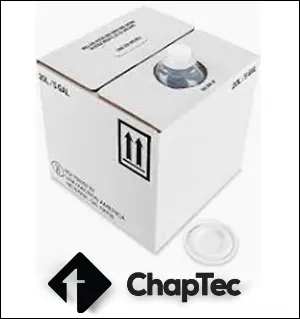
When laboratories choose a container for liquids, they sre sometimes tempted to choose corrugated cardboard, like for cubitainers of all sizes, as the plastic bag is a small amount of plastic to dispose of and the cardboard box is recyclable
However, infectious control requirements may shed another light on this choice. “Corrugated cardboard boxes are susceptible to moisture, water, vermin and bacteria during warehouse or storeroom storage, as well as transportation environments. Boxes and containers may have been exposed to unknown and potentially high microbial contamination.” *
For this reason, many labs are now aiming for a cardboard free environment to avoid these issues and maintain a good grip on infection control.
Which leaves the recycling of empty plasticware to be addressed. Some companies such as Chaptec, offer programs that tackle this challenge. Chaptec recuperates empty reagents containers and refills them with the same product that was originally in them. They feel that this service avoided sending 4 million plus containers to trash over the past few years.
Sometimes there is more than the eye can see and in this case, plastic sure seems to be the right choice!
Q: Why do some laboratories choose corrugated cardboard containers for liquids?
A: Because the plastic bags they contain use very little resin and the cardboard box is theoretically recyclable.
Q: Why does infection control challenge this choice?
A: Cardboard is susceptible to moisture, pests, water, and microbial contamination during storage and transport.
Q: What trend has emerged in laboratories because of this?
A: Many laboratories now aim to reduce or eliminate cardboard from their work environments to maintain contamination control.
Q: What problem remains when using plastic containers?
A: Empty plastic containers still need to be disposed of or reused responsibly.
Q: How does suppliers address this issue?
A: Chaptec for instance collects empty reagent containers from participating clients and refills them with the original product.
Q: What environmental impact has this had?
A: The program has prevented more than 5 million containers from being sent to landfills in recent years.
Q: What is the key takeaway?
A: Sometimes the environmentally responsible choice is not the one that seems most obvious— in this case, plastic can be the better option when paired with reuse and recycling programs.
Link(s)


| 470, avenue Laurendeau, Montréal-Est (Quebec) H1B 5M2 | |||
| Phone: | 514 498-3620 | Toll free: | 833 498-3620 |
| Email: | chaptec@chaptec.com | ||

